Showing posts with label Leadership. Show all posts

Monday, September 2, 2019

You Are The Association

This past week one of my staff members retired from working for our association. She has been with the organization for just over 30 years. At the celebratory lunch we threw in her honor I asked her how many former Executive Directors of the association she had worked with.

She she, somewhat matter-of-factly, that our association has had a total of five Executive Directors in its history, and that she has worked for four of them.

This was not the first time I had reflected on how much institutional knowledge we were losing with her (very well deserved) retirement, but her response really brought that reality to the surface for me. We're a small and somewhat long-tenured staff, but we had seen a handful of departures over the last few years, really bringing down our average years of service. Now that the 30-year veteran has retired, there's still one staff member with 20 years of service, another with 19, and then it's me, with 12. Since we have a total of 12 staff positions, that means that nine of the twelve have less tenure than me. Or to be precise, have been hired in the last 12 years under my leadership.

That is a very interesting way of looking at the situation. As the President/CEO (we switched away from the "Executive Director" title during my tenure), I always knew that I was the leader of the association, but being reminded that I was directly responsible for its staff team made me take a fresh look at the responsibility.

I've already written about how, when it comes to institutional knowledge, I can no longer rely on any of my Board members, since none of them had been in our leadership for longer than I have. And now, it's made apparent to me that I am among the longer-tenured staff members the association has.

It leads me to a startling conclusion. As the President/CEO, I am not just the institutional knowledge of the association, I, in fact, am the association, in a way that no single other person can be. Not only do I know where we've been, I also know where we're going and am actively working with Board and other staff members to make that happen.

It's a perspective, I think, that only long-tenured association executives can have.

+ + +

This post first appeared on Eric Lanke's blog, an association executive and author. You can follow him on Twitter @ericlanke or contact him at eric.lanke@gmail.com.

Image Source
http://harbus.org/2018/personal-presentation/businessman-looking-in-mirror-pan_12170/


Monday, August 19, 2019

The Lost Art of Reading Blogs

In last week's post I made a passing reference to one of the main reasons I keep blogging -- namely, that I enjoy having readers respond to the things I write. And I promised more on that subject this week.

Well, it's true. I do like having readers respond to the things I write here. But here's something else that's true. Almost no one ever does.

Here's a quick story. At this conference I attended a few weeks ago, I had a friend and colleague of mine mention the draft chapters of the novel I started posting here at the beginning of 2019. He told me that he hadn't gotten around to reading them yet, but that he had them bookmarked and was looking forward to diving it. Then he asked me what kind of feedback I'd received on them so far.

I looked at him and smiled. "You're the first person who's even mentioned them to me."

The look on his face was priceless. I don't think he thought it was possible. A: That I could post such a thing and not get any feedback on it. And B: That I would bother to post something like that if I wasn't getting any feedback on it.

Welcome to the world of blogs. Say whatever you want. Almost no one is going to read it and, of those that do, almost no one is going to have any kind of reaction.

That's okay. I get it. We're all busier than ever. And if there is a skill set that is increasingly absent in our society, it's the one associated with long-form reading and writing. You're more likely to get a reaction from a ill-conceived Tweet (assuming a bunch of additional ill-conceived Tweets count as a reaction) than you are from 500 words that you've carefully considered and curated. Sorry. #TLDR.

Which is why it's all the more remarkable when a reaction is actually received. Hey. I read this. I agree. Or I don't. Either way, thanks for putting it out there. I appreciate it.

That's a big part of why I keep doing this. Because when those connections are made the results can be pretty amazing. I've made friends. I've gotten consulting gigs. I've interacted with some of my favorite authors. All because I put my thoughts down in writing and posted them in the public forum we call blogs.

It's not for everyone. But for me it's been pretty satisfying.

+ + +

This post first appeared on Eric Lanke's blog, an association executive and author. You can follow him on Twitter @ericlanke or contact him at eric.lanke@gmail.com.

Image Source
https://blogs.msdn.microsoft.com/ianm/2009/08/06/10000-unread-hotmail-emails/


Monday, June 17, 2019

Two Kinds of Association Executives

There are two kinds of association executives. Those that come from the industry their association represents, and those that come from the field of association management.

I am the latter.

In my experience, executives that come from the industry their association represents generally know what to do, but have to learn how to do it. And executives that come from the field of association management, generally know how to do things, but have to learn what to do.

That's one way of looking at things. Here's another.

There are two kinds of association executives. Those that are Executive Directors, and those that are CEOs.

I have been both.

In my experience, one of the core jobs of the Executive Director is to frame a discussion so that the Board can decide the association's strategy, and then execute that strategy. And one of the core jobs of the CEO is to frame a discussion so that the Board can help the CEO decide the association's strategy, and then execute that strategy.

Two different kinds of two kinds of association executives. What kind are you?

What kind do you want to be?

+ + +

This post first appeared on Eric Lanke's blog, an association executive and author. You can follow him on Twitter @ericlanke or contact him at eric.lanke@gmail.com.

Image Source
https://www.shutterstock.com/video/clip-2175932-portrait-two-executives-conference-room


Monday, May 13, 2019

Are Site Visits an Art or a Science?

This past week I was on the road again -- this time siting a couple of properties for a future Board strategy retreat.

My current association takes the word "retreat" pretty seriously. We're always on the lookout for interesting and exclusive destinations -- places most of our Board members haven't been before, where they can spend some time out of their businesses and in the association, sprinkled with liberal amounts of social activity and outdoor excursions.

It's a pretty successful formula for us, and sometimes it's hard for me not to break it down into an actual formula. In another life, for another association, for example, I was responsible for booking two thousand room nights across half a dozen or more hotels for a large city-wide convention. On those site visits I would see a dozen hotels in a day, spending just enough time in each to get a sense of their quality, amenities, and value.

Back then, probably in order to stay sane, I had a overly simple system for keeping all those properties straight in my head and for picking the best ones. The first hotel I saw, regardless of quality, would get a ranking of "5" on a tally sheet I had already prepared for my visit. The first hotel was always my baseline. Then, after seeing the second one, I would ask myself, "Was that hotel better than the first one I saw?" If yes, it got a "7". If not, it got a "3". Then, onto the third hotel and another question. "How did that one stack up?" It would get a number that reflected its relative position to the first two hotels, say maybe a "4", or perhaps a "9".

I would proceed like this with every new hotel, positioning it in the mix while it was still fresh in my mind, until the day was done and I had a top to bottom list of all the hotels I had seen. Frankly, I would remember almost nothing else about them, but I was certain that the hotel that got a "7" on my tally sheet was better than the one that got a "5". And I would start requesting contracts based entirely on this system, starting with the highest scoring hotel and working my way down until I had all the room nights I needed for the convention.

Now, I live in a much different world. Instead of 12 hotels in one day, on this latest trip I saw only two properties in two days -- and, most importantly, I think, I got to spent a night in each of the properties vying for our business. For most of this time, I am unsupervised by the sales managers that offer the obligatory tour. I want to know what it's like being a random guest in their property -- ordering room service, using the fitness center, sitting in the lounge and seeing how long it takes for someone to come and take my order.

I'm intentionally going for a gut-feel. Will my Board members enjoy staying here? Will they get the kind of attention they expect and we want to deliver? And while I am intentionally trying to make decision based on qualitative factors, I sometimes still find it difficult not to break the process down into a set of quantifiable measures. How much is the room rate? How big is the ballroom? What F&B minimum are they requesting?

It's taken my a long time, but I think I've finally come to understand that while these quantifiable measures are important -- none of them really matter if the property in question has the qualitative factors that one desires. Within a certain range, we can make our retreat work with any set of quantities if it offers the qualities that make the event a memorable one for our Board members and a productive one for our association.

In this way, my site visits of today are much more of an art than a science.

+ + +

This post first appeared on Eric Lanke's blog, an association executive and author. You can follow him on Twitter @ericlanke or contact him at eric.lanke@gmail.com.


Monday, April 29, 2019

Associations Are Not Responsible For Hotel Rooms That Go Unused

A while back I wrote a kind of mini-series on this blog I called Paradoxes in Association Management, which I described as the counter-intuitive practices that we must embrace if we want to be successful. I'm not sure if this one really qualifies, but I'm going to try and frame it that way.

Associations are not responsible for hotel rooms that go unused.

Legally speaking, of course, we are. We signed the contract. The contract says we will utilize a certain number of room nights. The contract even says we can reduce our room night commitment in measured amounts prior to the conference if it appears we're not going to fill our block.

All that is true. At the same time it is all utterly irrelevant.

Here's the truth. When an association books three hundred hotel rooms for its upcoming convention, it is not then nor ever in a position to decide to put three hundred people into that hotel. It is not a convention for its staff. It is a convention for its members; which means that instead of one organization making one decision to put three hundred people in that hotel, there are actually going to be three hundred different people making three hundred different decisions about whether or not they will stay in that hotel and for how many nights.

Too often, we pretend this isn't the case. We look at convention histories, at pickup and occupancy reports, at attrition clauses and penalties -- all under the impression that it is somehow the association's responsibility to fill the convention hotel block. It is not. That responsibility belongs to the members of the association who will one-by-one be deciding to attend and book their rooms.

When a member decides not to attend -- or worse yet, books a reservation on the chance that they might attend, and then cancels the week before the conference when they decide they actually won't be going -- when that happens, if the hotel wants compensation for the hotel room that they took out of their general inventory so that member could have the luxury of deciding not to attend, it is the member and not the association who has actual liability for that room.

I don't care what the contract says. It wasn't, after all, the association that decided that member wouldn't be coming. It was the member him or herself.

This, I know, is a radical view. It goes against a century or more of practice and legal precedent. But it is the only view that aligns with the actual reality of the situation. Associations that don't figure out a way to push responsibility for unused hotel rooms on their own members will continue to face and pay attrition penalties in a game that is rigged against them. It is not their responsibility and they should stop thinking that it is.

+ + +

This post first appeared on Eric Lanke's blog, an association executive and author. You can follow him on Twitter @ericlanke or contact him at eric.lanke@gmail.com.

Image Source
https://www.itstactical.com/intellicom/physical-security/checking-securing-hotel-room-attacks-intrusion/


Monday, April 15, 2019

Clarity Is Fleeting

I was on the road for much of this past week. I was attending one of my association's major workforce development programs in and around Denver, Colorado, but where I was and what I was doing is not really relevant for the purposes of this post.

What is relevant is that I was away from my office, and that while I was away I was able to get a clear picture on several of the issues that have been vexing me of late. And now that I'm back, falling quickly back into my routine, that sense of clarity has very quickly evaporated and what had been vexing is vexing again.

This is not the first time that I've noticed this dynamic. Getting myself away from my patterns of activity and patterns of thought helps me approach sticky situations with a fresh mental perspective. Invariably, I find myself quickly convinced that a certain course of action is not only obvious, it is imperative. Not only do I know what to do, I feel an urgency to do it.

I'll often send myself an email with a short, crisp instruction. Do THIS, it'll say, and when I send it I think that I'll know exactly what it means when I get back to my office and come across it in the hundreds of messages that have piled up in my inbox. But in that context the instruction is not as obvious or as urgent as it once was. Yeah, I'll typically think, that seemed like a good idea at the time, but now that I'm back and dealing with all these other things on my plate, it might be better to push that off into next week, or maybe not even do it all.

The lesson here is to always remember that clarity is fleeting. There's a reason why things become clear when you reduce the number of things distracting you and weighing on your mind. And the next time you feel that sense of imperative urgency, the only thing to do is to act on it, then and there.

+ + +

This post first appeared on Eric Lanke's blog, an association executive and author. You can follow him on Twitter @ericlanke or contact him at eric.lanke@gmail.com.

Image Source
https://www.sandler.com/blog/why-creating-clarity-is-a-leaders-most-important-task-in-2015


Monday, April 8, 2019

Budgets and Bandwidth

Budgets and bandwidth -- two words that have received a lot of attention from me this week. Budgets because I've started sharpening the pencil on next fiscal year's budget for my association, and bandwidth because I've somehow found myself in the middle of four major projects, all hitting at about the same time.

And something occurred to me. Money will only go so far. There might be a hundred things we want to do, but if they all cost money, we're going to have to choose only a handful to focus on. But my time? Well, that's something very different. There has to be an upper limit, but it seems like we can always stretch that resource a little farther.

Maybe I need a time budget? Seriously. I spend so much time on my financial spreadsheets, adding in the cost of some programs, reducing the cost of others -- all in the critical attempt to get that bottom line to balance. We've only got so many dollars. How are we going to spend them?

Well, shouldn't the same concept apply to our time? We've only got so many hours in the day, and fewer still that we can be reasonably expected to keep working. What if we started with a fixed number and assigned a time value to everything we intend to put on our plates? Planning for that Board meeting? That's six hours. Writing that report? That's three. Meeting with and coaching my team? Add two more.

I think we'd quickly see that our time books don't balance. Assigning realistic time values to everything we do will add up to more hours than there are in each day -- and yet, somehow, we keep adding more things to do and we keep getting the right things done.

This is what I think we rightly call bandwidth. Unlike dollars, we can always spread our bandwidth out a little wider to cover more things. Everything we do will get a little less attention, but more things will get done.

Do those around us know we are doing this? They certainly would if we were talking about money. Sorry, all your programs only gets 90% of last year's budget because we need to add in something new. The people on the receiving end of that decision will howl if you pull something like that -- but if you do the same thing with your time and attention, they're likely to promote you to a position of even greater responsibility.

Budgets and bandwidth. Two very different resources used in two very different ways.

+ + +

This post first appeared on Eric Lanke's blog, an association executive and author. You can follow him on Twitter @ericlanke or contact him at eric.lanke@gmail.com.

Image Source
https://www.kiplinger.com/fronts/channels/money/index.html


Monday, March 25, 2019

Always On the Go

I had a day this week that defied logic. In the office at 7:00 AM, on the road at 9:30 AM, a conference presentation at 11:30 AM, back on the road at 12:30 PM, a conference call in the car at 1:00 PM, a planning meeting back in the office at 3:00 PM. And all throughout, checking and responding to emails, Tweets, and LinkedIn posts.

I got it all done, and I did it with grace and skill. I'm not trying to toot my own horn; just commenting on how normal things that are actually crazy seem. And craziest of all, while I was driving down the freeway at 75 miles an hour, connecting my hands-free phone to the conference call, I found myself looking forward to the advent of driverless cars so I could be even more productive on days like that.

Funny thing is, I did this all to myself. The conference presentation got booked first. I was invited, I accepted, and I put it on my calendar. It was only 90 minutes away by car, and, at that early date, there was nothing else on my calendar. I could drive down and spend the day there -- or so I thought.

Then the conference call came about. It was the only time and date in the next three weeks that would work for a particular Board member. Sure, no problem. It's after my presentation, so I can easily break away from the conference and take the call. Go ahead and schedule it.

And then the planning meeting. It's part of a new partnership we've been working on, and the day of my presentation was the only one that week that would work for the folks in the other organization. Can you possibly meet with them that day? Ummm, sure. If I leave the conference at 1:00 PM, I should be back in the office and ready to meet at 3:00 PM. Oh, wait. There's that conference call. Well, I guess I can do that hands-free in the car. Let's go ahead and book it.

There was a time when this level of productivity (if that's what you want to call it) would have been unthinkable. No, sorry. I'm giving a presentation at an out-of-town conference that day. We'll have to find other days for both the conference call and the planning meeting. But now, with the communication and transportation tools that we have at our disposal, days in which I give a conference presentation, participate in a conference call, conduct a planning meeting, and spend three hours in the car, are not only possible, they are increasingly the norm.

That's a good thing, right?

+ + +

This post first appeared on Eric Lanke's blog, an association executive and author. You can follow him on Twitter @ericlanke or contact him at eric.lanke@gmail.com.

Image Source
https://www.autotrader.com/car-tips/buying-used-car-why-are-highway-miles-better-225870


Monday, March 11, 2019

Staying Ahead of Your Members

There's an old saying among association executives. To be successful, you need to stay ahead of your members ... but not too far.

What most people mean by this, generally speaking, is that the association executive that doesn't act until his members make their collective desires known will wind up leading his association into either obscurity or oblivion. He won't, in fact, be leading. He'll be following, and people will question what he's in charge of and why the association is paying him so much.

However, the association executive that charges out too far ahead of her members will frequently find herself in similar trouble. She may think that she is leading, that she has read the broader marketplace around her association and is bringing needed reforms and innovations to the association and the industry it represents, but if the members aren't on board (or worse, don't understand) they will think she had gone rogue. Too big for her britches. Whose association is this, anyway?

Success, then, lies somewhere in the middle. Lead the organization. Open new doors and take your members through them, but make sure they know what's on the other side and are excited about going there.

For all those association executives out there who may be wondering how well they are walking this line, remember that your association's Annual Conference is an ideal opportunity to check yourself. To show not only that you are leading the association, but also to connect with the members and make sure they understand and support the direction you're going.

My Annual Conference was this past week, and it afforded me exactly this opportunity. Speaking from the podium, laying out the strategies we're pursuing and the reasons why, and then chatting with members during the breaks, receptions, and dinners. Do you agree with what we're doing? Are you finding value in our activities? Is there something else you think we should be doing? It provided a kind of one-two punch. Lead first, then connect. And, of course, adjust based on the feedback received.

It's one of the best ways I know to successfully stay ahead ... but not too far ahead ... of your members.

+ + +

This post first appeared on Eric Lanke's blog, an association executive and author. You can follow him on Twitter @ericlanke or contact him at eric.lanke@gmail.com.

Image Source
https://zoeinspirational.wordpress.com/2016/03/02/setting-the-pace/


Monday, March 4, 2019

Looking Back From a Feeling of Triumph

My daughter plays the piano and the violin. She's an eighth-grader now, and every year for the past three years she has tried out for our state's Solo & Ensemble Music Festival, in which school children across the state prepare and perform a piece on their instruments, which is judged by a professional music teacher or instructor. Those judged worthy are then invited to participate in the festival, where they again perform their piece, are judged again, and can win ribbons and trophies.

My daughter likes her piano and her violin, but like a lot of kids her age, there are other things she likes even more. In her case, those things are drawing in her sketchbook, composing music and coding online, and playing video games with her friends. If she has a choice, these are the activities that are going to fill her free time, not practicing her piano and violin pieces for the state music festival.

Today were the tryouts for the festival. As I drove my daughter to the high school where the tryouts were being held, I asked her if she thought she was ready. She said she wasn't. When I asked her why, she said she hadn't practiced her pieces enough, and was worried that she was going to make mistakes during the performances.

So I told her a quick story.

On Friday of this past week I had a business meeting in downtown Milwaukee. It was a meeting of one of the committees of my association, a group of technical experts who would be using their expertise discuss and decide some important matters for the organization. My job was to be the facilitator -- to guide the committee through its agenda, ensuring that all voices were heard and helping to codify the consensus view into a clear and representative document.

It was the kind of thing I had done before, but I was still nervous about it. Given the subject matter of the meeting, I was a little out of my element, and I had some lingering worries that something unproductive would happen. The committee members would reject the premise I had constructed, or would drive the discussion in directions where my deficit of understanding would become apparent.

As a result of these worries, I had spent a fair amount of time preparing for the meeting. I had done my homework, reading the previous reports of the committee and brushing up on my understanding of the trends and technologies they would be discussing. There were things I would have rather been doing with the time that I had dedicated to these tasks -- reading a book, perhaps, or watching a movie on Netflix -- but I had kept myself focused and put in the time necessary to get myself as prepared as I could possibly be.

And when the meeting was over, and things had gone well, I realized something about my own motivations. I had done something I didn't want to do not just because I was afraid of my own public failure, but also because the feeling of success, the feeling that came from doing something difficult and doing it well, was worth the extra effort.

Not in the moment, certainly. In the moment, whether it was reading technical papers or practicing a piano solo, the extra effort never felt worth it. There would always be something more enjoyable tugging on the corners of our minds. But in retrospect, looking back from a feeling of triumph, only then would it become apparent that laboring over every technical term or chord combination was absolutely worth the investment of time and attention.

The trick, then, is that when the going gets tough, to put yourself forward into that envisioned feeling of triumph. Knowing how good that is going to feel is what can give you the motivation to push through with something you know is necessary but would rather not be doing.

My daughter's a smart kid. I'm sure she understood the message I was trying to send her. At least when I asked her if she did, she did me the courtesy of not rolling her eyes.

+ + +

This post first appeared on Eric Lanke's blog, an association executive and author. You can follow him on Twitter @ericlanke or contact him at eric.lanke@gmail.com.

Image Source
https://www.videoblocks.com/video/close-up-of-teenage-girl-playing-violin-in-orchestra-practice--american-fork-utah-united-states-s1golmlhiporl7w6


Monday, February 25, 2019

The Tightrope

Sometimes I feel exactly like the tightrope walker in the picture accompanying this post -- out on a thin and dangerous wire, leaving one position of safety with the hope of reaching another, alone, and with only the balance pole of my wits and my association's mission to stabilize me.

The first position of safety? That's my current organization, where, although there are some strong winds buffeting us, things are working well and people are satisfied.

The second position of safety? That's my organization in the future, after successfully repositioning itself so that it is working with the winds and not trying to stand against them.

And the wire? That's the path between the two positions of safety -- and it's my job as the staff executive to first chart that path and then lead others across it.

With me so far? Because here's the trick. Atop each building, standing firmly in each position of safety, are two distinct groups of people. Each group is comprised of an odd assortment of association members, Board members, organizational partners, competitors, and staff. The group on the forward building is cheering me on but can't actually help me across the chasm, while those on the building behind me are are throwing rocks and shaking the wire. It's not safe! they might be shouting. Are you crazy? Get back here!

This, I think, is one of the key challenges of leadership. And often, it is less about making it successfully to any one particular building, and more about simply not losing your balance so that the journey to another building can be made.

+ + +

This post first appeared on Eric Lanke's blog, an association executive and author. You can follow him on Twitter @ericlanke or contact him at eric.lanke@gmail.com.

Image Source
https://blog.oxforddictionaries.com/2014/08/07/tightrope-walking-and-ambulances/


Monday, February 18, 2019

Annual Conference Mode

On the day this posts, my association's Board meeting and Annual Conference will be two short weeks away. This has traditionally been my time to enter what I call my "Annual Conference Mode."

What does that mean? Well, the simple rule I try to start following is that if it isn't related to pulling off a successful Board meeting and Annual Conference, then it's going to wait until after the conference is over.

Like most simple rules, this one is always easier to state than it is to follow. Just because I've made the shift, the world around me hasn't, and there are just as many distractions and competing priorities in my day-to-day existence as there always is. Bowing to this reality, I will usually work on the most pressing and time-sensitive issues for a short time each morning before switching my focus entirely to the tasks that must be done -- and that only I can do -- in order to pull off a successful Board meeting and conference.

I've come to understand that this kind of laser-focus is necessary -- and that it only can happen if I consciously give myself permission to exert it.

Yes, I know they expect a response from me, and yes, I know that this project is already past due, but seriously, if I don't finish and practice this presentation I'm going to make a fool of myself on the Annual Conference stage, and if I don't double check the financial report, I'm not going to have the numbers the Board needs to make intelligent decisions about the future. 

These are the kind of things I tell myself when I enter Annual Conference mode to keep the ever-encroaching demands of the urgent from getting the better of me. Because they will if I let them. Everything that's on my plate is there for a reason, but not everything has to get done today or even tomorrow. And although that conference is still fourteen days away (or thirteen, or twelve, or eleven), if I don't start working on this presentation or this agenda document, I'm going to find myself with a very visible failure on my hands -- one that it may be difficult to recover from.

I think one of the things that surprises me about Annual Conference mode is how difficult it is to maintain. Two weeks of focus on one thing is critical, but also exhausting, and sometimes the mind just looks for something else to work on to keep from going crazy.

It makes me wonder if a better strategy wouldn't be to practice a little but of "Annual Conference mode" at other times and for other projects. Maybe a block of time every day or a day every week, when all the other things that demand your attention can be turned off and you can dedicate yourself wholly to one important task.

Might be a new way to getting things done and teaching yourself to focus on the things that matter most.

+ + +

This post first appeared on Eric Lanke's blog, an association executive and author. You can follow him on Twitter @ericlanke or contact him at eric.lanke@gmail.com.

Image Source
http://productivemag.com/25/how-to-become-laser-focused-at-what-you-do


Monday, February 11, 2019

Planning for Staff Dinners

This week we had a planning meeting for our upcoming Annual Conference. Because our Annual Conference is popular with members this year, and because we ran out of sleeping rooms at our conference hotel, we've moved our staff to another property about a mile and a half down the road. This, I think, appropriately prioritizes the sleeping rooms for our members attending the conference and avoids the awkwardness that can arise if a member, having been turned away from the conference hotel, discovers that up to seven association staff people are staying at the property in their place.

The meeting was a typical one for our planning cycle -- its purpose being a detailed walk-through of the entire event with all the staff attending, and making sure that the right people are assigned and aware of their need to be in the right places at the right times. Only one thing was different, and that was the fact that we were all staying in another property, meaning that we had to be much more deliberate about the time and timing associated with transfers from one hotel to the other.

We figured it out. But one additional thing that became apparent as we went through the exercise was the need to specifically plan for staff dinners on the appropriate nights.

This was something we didn't usually need to discuss in such a meeting. Once on-site, experience had shown, nightly plans would typically come together organically. Hey, Leslie made reservations for 7:00 o'clock tonight. We're all meeting in the lobby at 6:45. Pass the word. It worked because we were all in the same place (sometimes our sleeping rooms even being all on the same floor), and it was easy -- and simpler -- to slap something together at the last minute.

But, this year, with a van taking different staff people back and forth at different times of day and night, we realized that if we were going to come together for our traditional staff dinners, we would need to make some decisions now and get them on everybody's calendars.

And that's exactly what we did, with different people volunteering to make advance reservations for each night, sometimes at the conference hotel, other times at the hotel we were all sleeping in, and sometimes out on the town.

It was while we were doing this that it struck me -- more so than it ever had before -- how important these staff dinners were to our success and sanity. Making plans in advance was not only necessary this year, it was probably something that should be done every other year as well. After the long days we would all be working, it was at these dinners where we would let our hair down a little, make non-ironic toasts to our success, and sincerely celebrate the teamwork that is required if we're going to pull off something as complicated and important as our Annual Conference.

That's something we shouldn't be leaving to chance, don't you think?

+ + +

This post first appeared on Eric Lanke's blog, an association executive and author. You can follow him on Twitter @ericlanke or contact him at eric.lanke@gmail.com.

Image Source
https://www.eastbayexpress.com/oakland/what-the-staff-eats/Content?oid=3502070


Monday, February 4, 2019

Closing the Office vs. Working From Home

This past week brought the Polar Vortex to the Midwest and with it record-breaking temperatures well below zero. In my neck of the woods it was immediately preceded by a massive snowstorm, which dumped up to a foot of snow during what we would normally consider our morning and late afternoon commutes.

It was a kind of one-two punch, and it caused me to first rethink and then abandon my association's "office closing" policy.

Long ago, when I was first hired to run my current association, there was no such policy. That first winter, when the snow started coming down, and schools and other businesses were closing, my employees had to call me to find out if our office was going to close, too. It only took one snowstorm for me to realize how inefficient that system was. What we needed, I thought, was a consistent standard. Some external indicator that, when it occurred, everyone knew that the office would be closed that day.

We chose the closing of our local city school system. If the Milwaukee Public Schools closed (which they did three or four times a year, and usually with at least night-before advance warning) then our office would close, too. No need to call the boss. No need for the boss to call everyone and let them know.

For a while, it worked fairly well. There were only two wrinkles that had to be ironed out. First, sometimes MPS closed not because there was a ton of snow making travel hazardous but because it was bitterly cold outside and they didn't want students standing outside waiting for their buses to pick them up. We decided that was less of a concern for our staff, so we had to start clarifying why MPS was closing before knowing what to do. Was it because the roads were bad? Or because the temperature was below zero?

Second, what did we expect staff to do on these days when the office was closed? Closed, in my mind, meant closed, so that there was no expectation that phones would be answered or that staff could be reached. The outgoing message on our office voicemail would be changed to reflect that situation, but we still expected people to work, if they could, on appropriate projects at home. When I first started twelve years ago, that could be simple or hard depending on each person's technical set-up, but as the years passed, "working from home" became easier and easier. Our email is now in the cloud and our VPN can get us into our file server so, as long as a staffer has a computer and an internet connection, they can actually get quite a bit done while the office is "closed."

Now, fast forward to this past week. Monday is the major snowstorm, MPS closes, and so do we. No problem there. But on Tuesday the temperature plummets and the roads are still not cleared from the pounding we took the day before. MPS closes, but why did they close? Is it because the roads are bad? Or because the temps broke the thermometer? Or both? And how do we interpret our policy in each situation.

What I had thought was straightforward suddenly revealed itself as wonderfully complex. Everyone showed up for work that day, so, around our staff meeting table, we stripped our policy down to its bones and tried to figure out what to do next. And in doing so, we realized so how much had changed in the last twelve years, and perhaps nothing more than our ability to work productively from home.

Twelve years ago most people had dial-up internet in their homes and we had a stable of laptops that we loaned out to staff when they traveled. Today, everyone had a company laptop and most had blazing fast home internet connections (the better to watch streaming video services with). Working from home was much more realistic today than it was twelve years ago. So much so that we had recently moved to a flexible schedule where everyone was working from home one day a week -- winter, spring, summer and fall.

And it was that realization that helped me abandon the archaic idea of an "office closing" policy entirely. Why should the office close at all? It wasn't "closed" on the scheduled day we were all working from home. We managed to answer the general line, our direct lines, send just as much email, and get a lot of things done on these days. Now, and in the future, whenever the Milwaukee Public Schools closed -- because of snow or because of frigid temperatures or both -- we would not close the office. We would just declare a "work from home" day.

And that's exactly what we did when MPS closed for Wednesday and Thursday of Polar Vortex week. It was 22 degrees below zero outside, but I and my staff were all warm within our respective homes, accessing our file server, responding to our emails, and conducting our important meetings via conference call.

Take that, Polar Vortex.

+ + +

This post first appeared on Eric Lanke's blog, an association executive and author. You can follow him on Twitter @ericlanke or contact him at eric.lanke@gmail.com.

Image Source
http://feelgrafix.com/981576-blizzard.html


Monday, January 14, 2019

Give Me Free Afternoons

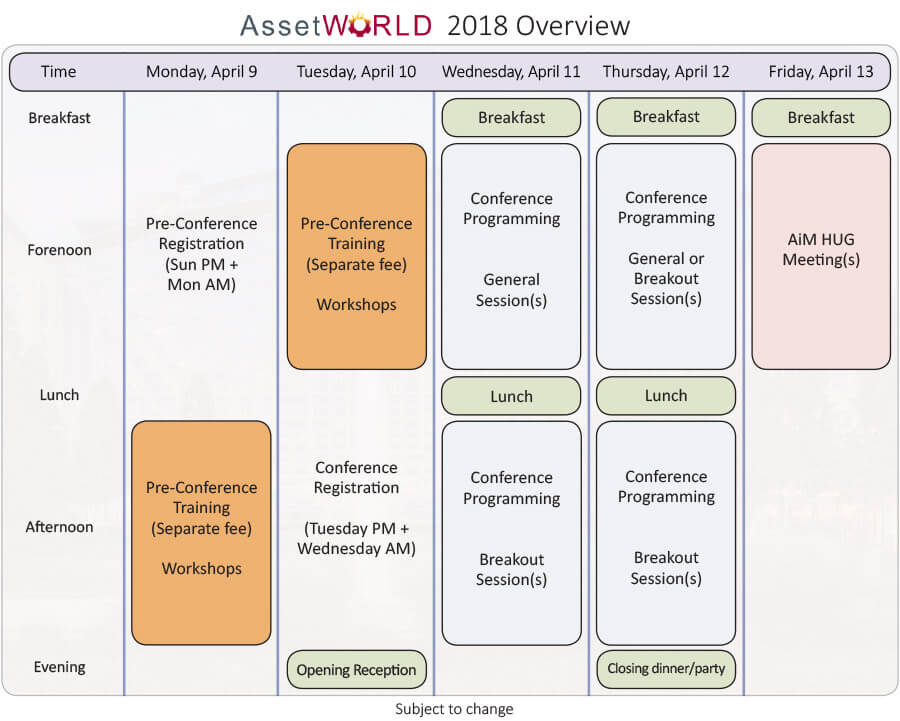
This post in Associations NOW recently caught my eye, arguing, as it does, for association conferences that span a fewer number of days in recognition of the increasing desire for "work-life balance" among association members.

I've got a different take. Don't shorten the number of days that your conference spans. Shorten the amount of time I spend in educational sessions on the days that I am there.

I used to work for a professional medical specialty society. Educational sessions at their Annual Meeting began at 7:00 AM and ended at 9:00 PM. As a staff person, running that conference was exhausting, but many of the attendees expressed similar sentiments. Most, in fact, didn't stay for the full conference run of six days. Two, maybe three days was as much as most attendees could handle.

I now work for a trade association. Educational sessions at our Annual Conference begin at 8:00 AM and end, at the latest, at 2:00 PM. All the activities in the afternoon are completely optional and are purely recreational. We even tell our attendees to go out and have some fun. We'll want to hear all about it when we see them again at the evening social dinner.

Speaking as a staff person, I far prefer the less intense schedule of the trade association. But exposure to that reality has spilled over into my approach to my own professional education activities. When I attend an educational conference, I want my afternoons free. So much so that, if the conference has scheduled educational sessions that go past 2:00 PM, I, without apology, will play hooky and do something else.

What do I do? It depends. Sure, sometimes, I catch up on email or knock off a work project that has been on my plate for too long. But more frequently I will do something more rejuvenating. I'll grab a workout in the fitness center. Or (depending on the weather) sit in the sun with a good book. Very occasionally, I'll even take a nap.

The point is, if the objective is to give people more "work-life balance," there are more ways to do that than cramming the content of a three-day meeting into one. Quiet and contemplative time away from home and office, and away from the usual onslaught of speakers and presentation slides, can be one of the most powerful tools we busy professionals have to put new thoughts, attitudes, and objectives in their proper order.

That ain't gonna happen in the airport on the way home, and it certainly ain't gonna happen when I'm back in the office the following day.

+ + +

This post first appeared on Eric Lanke's blog, an association executive and author. You can follow him on Twitter @ericlanke or contact him at eric.lanke@gmail.com.

Image Source
https://www.assetworks.com/assetworld/assetworld-2018-program/


Monday, December 3, 2018

Traveling Is So Much Fun

I flew in and out of LAX this week. It's not a frequent airport for me -- I can't even remember the last time I was there. But something happened there that I thought was worth blogging about.

When I arrived for my return flight home I didn't at first recognize anything as unusual. My Uber driver dropped me off curbside, I got my boarding pass from the automated machine, I found the TSA pre-check line and went through security. All normal. But when I got into the gate area something was very different.

Live musicians were playing on professional sound systems. Scores of people were wearing white "I LOVE LAX" t-shirts. Airport muckety-mucks in three-piece suits were scattered about in unusual numbers. Several TV cameramen were moving about, capturing B roll or chronicling stand-up interviews. And amidst it all, many of my fellow travelers seemed to stumble around in happy amazement. Look at all the glitz. Look at all the pretty people.

Needless to say, I was not one of them. I was annoyed, not amazed. I was just trying to get to my gate. Can you get out of my way, please?

At the gate I asked the agent what was going on. Was this a brand-new terminal or something?

No, she said, but the food court is new. They opened it recently and today they decided to have a media event.

I looked over at the food court. Most of the brands were unfamiliar to me, but the options weren't. Coffee. Burgers. Burritos. Pizza by the slice. Chicken sandwiches. That's it? Really?

The gate agent gave me an understanding look. What are you going to do?

Look, don't get me wrong. I spend a fair amount of time in airports, and I appreciate any of all efforts to make them more pleasant places to spend that time. But here I was, traveling home after attending another conference, stuck with a humorless Uber driver for an hour in Los Angeles traffic, trained by TSA to keep my electronics and carry-on liquids to an absolute minimum, and looking only for a quick bite to eat, an electrical outlet, and a WIFI connection before folding myself into an uncomfortable coach seat for the next four hours -- and all around me people seemed to be celebrating, seemed to be excited about this strange and somewhat soulless experience known as modern air travel.

It was surreal. I'm not sure there's any other word to describe it. And amidst all the fanfare and flashing flat panel television screens, I saw an ad for the new People Mover that was evidently the next step in these magical LAX improvements. Coming soon, the ad said. Opening in 2023.

2023? Remind me not to go back to LAX until then.

+ + +

This post first appeared on Eric Lanke's blog, an association executive and author. You can follow him on Twitter @ericlanke or contact him at eric.lanke@gmail.com.

Image Source
https://dailymaybay.vn/san-bay-quoc-te-los-angeles.html


Monday, November 26, 2018

Inside Baseball

I'm not much of a sports fan, but one sports analogy I use pretty consistently is the term "inside baseball." I use it to describe a situation when I'm going into too much jargon and detail in front of an audience that doesn't understand or doesn't need such an in-depth explanation. I'm even self-conscious about doing it, often warning people before plowing deep into the picayune that what I'm about to say may be too much "inside baseball" for them.

Never, however, did I think that the very name of my association's industry would be too much "inside baseball" for some people.

I mean, in a way, I did. As the staff executive of the trade association that represents the fluid power industry I have long gotten used to explaining at cocktail parties not just what an association is but what "fluid power" means. "Does that have something to do with hydro-electric dams?" is the most common inquiry on this front. No, I have to explain, fluid power is an umbrella term that encompasses both hydraulic and pneumatic technologies. They both use a fluid to transmit power through a system. For hydraulics, that fluid is a liquid. For pneumatics, it is air.

It happens so frequently that I knew it was something I had to address when I was recently given the chance to present on career opportunities in the fluid power industry to a group of U.S. Army service men and women who would soon be returning to civilian life.

"How many of you know what fluid power is?"

It was the first sentence out of my mouth. And, as I expected, not a single hand in the room went up. I was ready for that. My presentation began with a basic definition of the term, a schematic of a simple fluid power system, and several examples of the technology at work in the real world. But before advancing the slide, a strange inspiration struck me.

"How many of you know what hydraulics is?"

Every hand in the room went up.

"How many of you have had hydraulic oil on your hands?"

Every hand in the room went up again.

And that's really when it struck me. After all those explanations at all those cocktail parties, it hadn't really sunk in until that moment in front of our nation's soldiers. Fluid Power, the very industry I represent and to which my career is dedicated to strengthening, is too much "inside baseball" for practically everyone on the planet.

The term works well in our industry, but for everyone coming at us from the outside, "hydraulics and pneumatics" is the way to go.

+ + +

This post first appeared on Eric Lanke's blog, an association executive and author. You can follow him on Twitter @ericlanke or contact him at eric.lanke@gmail.com.

Image Source
http://citythatbreeds.com/2015/06/ctb-podcast-105-hot-inside-baseball-chat/


Monday, October 29, 2018

The Facilitator's Job

I was asked to facilitate one of the breakouts at the last conference I attended. (If you're a regular reader of this blog, you know that last week I said I had six more conferences and workshops to attend before the end of the year.)

The conference organizer reached out to me, I assume primarily because of my position as the President/CEO of the trade association that represents the technology that would be the focus of the breakout, and asked me to take on this role. Even though I knew the discussion in the breakout was likely to get technical, and that my long-ago Bachelor's degree is English Literature was not likely to help me, I never hesitated. Yes, of course I'll facilitate the breakout.

Here's what the conference organizer said would be my job: "Your breakout session will be an open mic format for participants to talk about their perspective on the technical challenges, market barriers, and future direction for [subject of breakout session]. Please be flexible and ask people if they would like to speak. Please remember to take good notes (ask someone to help you if you need help). You will need to write up the findings and present them in the main room following the session. Thank you and good luck!"

It wasn't much to go on, but it was enough. I did just a little homework before the session, familiarizing myself with some of the latest information I had on the breakout's subject. I even put some of that information together in a few slides, but I wasn't sure I was going to use them. I figured I would have them as a backup in case participation fizzled or started to wane.

Turns out I didn't need them. There were plenty of people who wanted to talk in my session and I quickly saw that the real challenge was not going to be getting people to contribute, but identifying a list of summarized comments that everyone in the session would agree fairly represented the group's thoughts and opinions.

That, you see, is really the job of a facilitator. It is not just making sure everyone has a chance to speak, and it is not just transcribing everything that everybody says. Facilitators often do those things, but the real job of a facilitator is to listen carefully to all of those ideas, identify the common ideas and concepts, and then repeat them back to the participants to ensure they are being fairly recorded.

And that's pretty much what I did. Like I've done a dozen or more times before, I live-edited a document that was projected up on a screen for the whole audience to see. To keep some order, people who wanted to speak were given no more than five minutes to make their case. I let that go on for the first half of our session time, listening the whole time for common ideas and concepts and populating my document with them. Then, with apologies to anyone who had not yet had the chance to speak, I revealed the list I had been working on to the room and asked for everyone to react to it. Was it accurate? Did it fairly summarize the major themes that we had all just heard emerge over the last hour?

That created a lot of back and forth, and that was exactly what I expected and wanted. One person wanted one of the bullet points changed. Another person wanted to add another bullet point. A third person thought the third bullet point should be nested under the fifth, but a fourth person disagreed, explaining how he saw the two bullet points as discrete concepts.

For much of this discussion I was simply the scribe, editing the document in accordance with each person's suggestion, but each time checking with the room to see if anyone disagreed. Wearing my facilitator's hat, I then made sure that disagreements turned into discussions, and discussions turned into compromises that both parties -- and the room -- could live with.

In the end we had about four slides of content, summarizing the discussion of the group. When I presented the slides in general session a few minutes later, I observed breakout participants in the audience nodding their heads in approval. I had accomplished what I had sought out to do -- fairly capturing the general themes and recommendations inherent in the group's discussion.

I didn't write this post to pat myself on the back. I wrote it to make the point I've made once or twice before on this blog. Some people are impressed with my ability to do what I've just described -- to listen to a group's discussion and to work collaboratively with them to distill it down to its basic elements. This was not the first time that I've received accolades from participants and observers on my ability to do exactly that. And although perhaps I may have some natural talent for parsing ideas into words (English major, anyone?), I firmly believe that not only can this skill can be learned -- it has to be learned by anyone who wants to call themselves and association professional.

The facilitator's job? From where I sit, it's just another word for association management.

+ + +

This post first appeared on Eric Lanke's blog, an association executive and author. You can follow him on Twitter @ericlanke or contact him at eric.lanke@gmail.com.

Image Source
https://www.ksl-training.co.uk/free-resources/facilitation-techniques/group-facilitation-techniques-and-methods/


Monday, September 17, 2018

Ode to the Lonely Trade Show Worker

I attended a trade show this past week. It's something I haven't done in a while, and I was surprised by how little things have changed. Aisle carpet, booth numbers, giant computer screens, shiny products on lucite display stands. And, of course, booth personnel.

Except booth personnel come in several varieties. Forget for a second about the suit-coated or polo-shirted legions that scramble across the big island spaces like ants on a picnic basket. They have corporate objectives and training, supervisors and schedules. Let's instead focus on the solo staffer working the anonymous ten by ten.

You've seen them. They're tired. They got there early and set-up the booth themselves, and they're going to tear it down by themselves at the end of the show. They've been on their feet all day, and their only breaks have been a few quick dashes to the bathroom. They have, in my humble opinion, the worst and most impossible of all jobs. Lost in the basement of some exhibition hall, squeezed into a row of fifty other booths just like theirs, they are there to sell, sell, sell.

Now, these personnel come in two basic varieties.

The first stands at the edge of their booth space. They smile, they make eye contact, they try to engage passersby in some kind of conversation. They know you don't want to talk to them, but they are there to talk to you, and they are not going to let something like a universe tilted against them stop them from doing that.

The second sits in the back of their booth space. Their legs are crossed, their backs are stooped, hunched as they are other their cell phones, their noses close enough to open apps. They don't want to be there. They're counting the minutes until they can leave. They have been treated unfairly and they have given up.

We've all seen this. We've all encountered both of these varieties in the wild. And we all know that the second kind far outnumbers the first.

Why? How many levels of broken must there be for this to be our reality? What is the point of having a booth at the trade show if the person staffing is not going to try? The big flashy island with the cappuccino machine at the front of the hall is going to get all the traffic it needs. The ten by ten under the leaky pipe in the basement is only going to have so many chances for a connection. And it is only the unsung person working that booth that can make them happen.

Hello! How are you doing today?

Bless you. You and you alone make my visit to this trade show worthwhile.

+ + +

This post first appeared on Eric Lanke's blog, an association executive and author. You can follow him on Twitter @ericlanke or contact him at eric.lanke@gmail.com.

Image Source
https://www.business2community.com/marketing/event-trade-show-etiquette-4-tips-make-booth-success-01387675

Monday, August 13, 2018

Thinking in Four Colors

I attended a conference last week where one of the sessions was on the Hermann Whole Brain Model. Not familiar with it? It's another one of those HR assessments that labels the innate characteristics of individuals in an organization and, primarily by giving people a common language for discussing and understanding these differences, promotes better communication and collaboration.

For the sake of this blog post, let me oversimplify what the Hermann system says. Essentially, there are four ways of thinking: Analytical, Practical, Relational, and Experimental; which the system handily color-codes as Blue, Green, Red, and Yellow, respectively. See the attached graphic. And although everyone employs a subtle mix of all four colors, Hermann says that everyone is dominant in only one of these areas. By understanding your dominant way of thinking and the dominant ways of thinking of others on your team, everyone can learn to better communicate with each other and get more things done more quickly.

As part of the session, we attendees were all asked to self-assess and select the color that corresponded with our dominant way of thinking. Then, by seating us all at tables that intentionally contained a mix of colors -- that is, a group of people with a mixture of the dominant ways of thinking -- the facilitator led us through an exercise that demonstrated how the Hermann system could be practically applied in an organization.

Except there was one problem. The facilitator was a self-described Yellow. The graphic I included above associates the word Experimental with Yellow thinking, but other descriptive words she shared with us for her kind of thinking were Adventurous, Conceptual, Future-Oriented, and Big Picture.

And the exercise she led was exactly that. It was Yellow. Long on concepts and short on details. Its few instructions contained errors that seemed to contradict the very premise she had presented. Everyone around the table I was at were confused by it to one degree or another. But, interestingly, our reactions to it seemed to underscore the very concepts that the system was trying to communicate.

The Yellows, generally speaking, were much more on board with it, really liking the forest and not all that concerned about the trees that comprised it. The Reds were happy to use it as a springboard for talking about their feelings. The Greens worked really hard, first trying to understand and then trying to impose their own process on the exercise. And the Blues, like me, skeptically questioned the utility of the whole thing, not seeing the "bottom line" usefulness of either the system or the exercise.

It was, I realized, a interesting validation of the system itself. Here we were, a group of people with different ways of approaching problems, confronting a problem in each of our different ways, and doing it exactly as our color-coded areas of dominant thinking would have predicted.

So in this way, the exercise was a success. Except the purpose of the exercise was to demonstrate how a mixed group like this could come together, understand and employ each other's dominant strengths, and then solve a problem. And this we absolutely did not do. By the time the session came to a close, the best we had managed to do was simply to understand and acknowledge the colors represented around the table.

Hmmm. Looking at it from the point of view of our Yellow facilitator, maybe that was the point.

+ + +

This post first appeared on Eric Lanke's blog, an association executive and author. You can follow him on Twitter @ericlanke or contact him at eric.lanke@gmail.com.

Image Source
https://www.herrmannsolutions.com/what-is-whole-brain-thinking-2/